LATEST
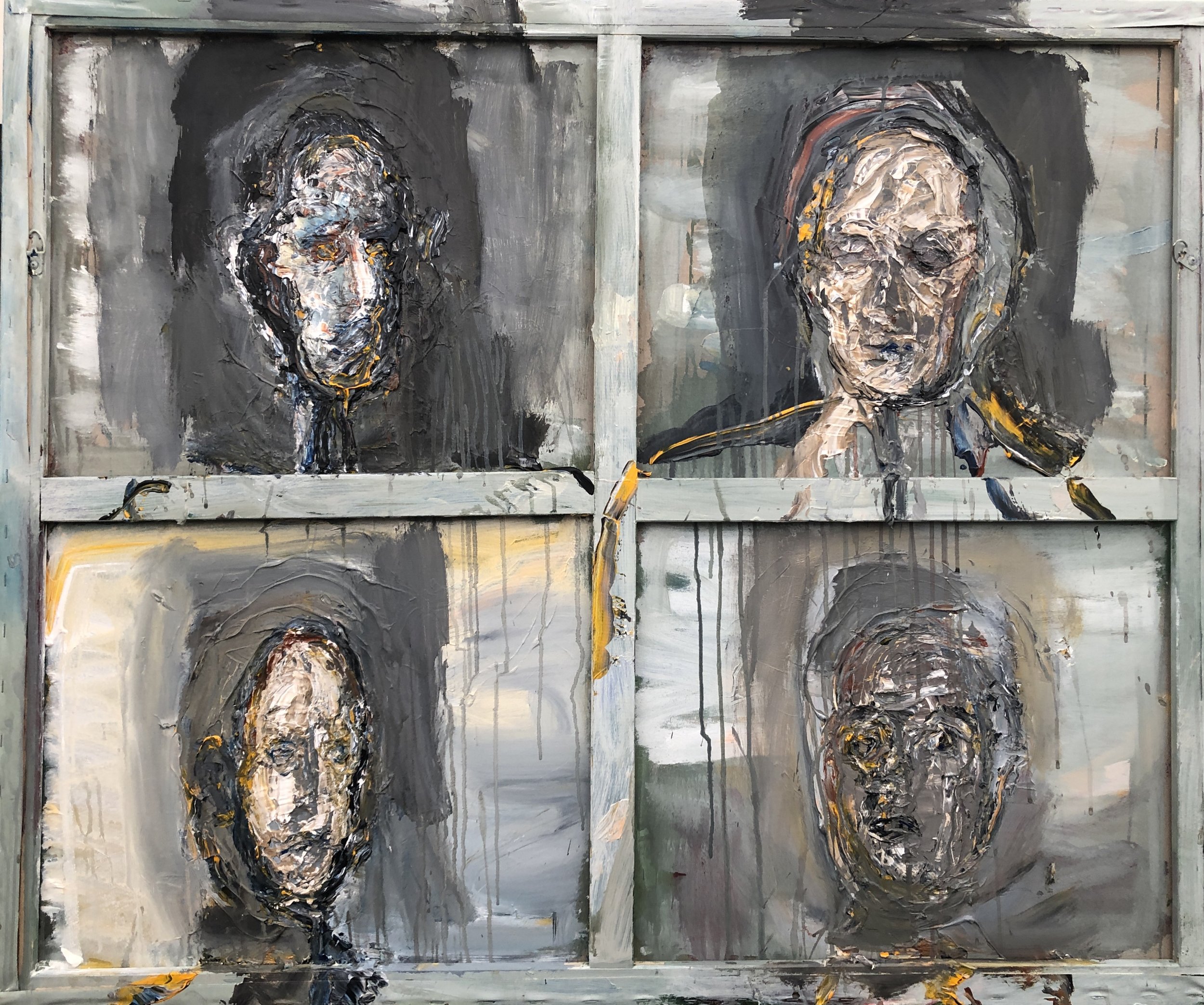
We need not pretend that there is anything inherently subversive about free-standing paintings, not at a time and in a cultural milieu that seems willing to accept anything as art, whether stretched on custom strainers or duct-taped to the wall. What is, however, truly subversive (since the artworld seems intent upon that term) is a good painting—a few of which were on view last month in The Individualism of Dona Nelson at CANADA.
“Kierkegaard wrote a marvelous thing in Either/Or. He said he feels that when he dies, they are going to ask him only one question, when he gets up there. And the question is, ‘Did you make things clear?’”
What happened was this:
We, the student body, decided to never speak again.
CRITICISM
“Kierkegaard wrote a marvelous thing in Either/Or. He said he feels that when he dies, they are going to ask him only one question, when he gets up there. And the question is, ‘Did you make things clear?’”
Do we know what film is about today? The ersatz cinema which fills theaters seems to tell us definitively: No. Stone’s film is much more than a cultural product of its time. It’s one of the best films of the 1990s and still has a great deal to teach us about how film works, and what it means to make a political film.
Imagine driving in your car listening to MJ on the radio, grooving and enjoying the song until … wait … you stop to ask yourself … was this bassline played manually by a human, because if MIDI sequencing was involved, I don't like it anymore. Said no one ever!
We need not pretend that there is anything inherently subversive about free-standing paintings, not at a time and in a cultural milieu that seems willing to accept anything as art, whether stretched on custom strainers or duct-taped to the wall. What is, however, truly subversive (since the artworld seems intent upon that term) is a good painting—a few of which were on view last month in The Individualism of Dona Nelson at CANADA.
These poems remind us how the literary past is always waiting for us in the literary future…
Most viewers, upon encountering Lamar Peterson’s work, will go no further than to subsume the paintings under the generic category of “black figuration.” This is to be expected; most people don’t care enough about art to actually look at it (whether they admit it to themselves or not).
Bret Schneider delves into everything from Indian ragas to Bach’s recreation of the mind with composer and pianist Michael Harrison.
Bret Schneider speaks with composer Katrina Krimsky about her career spanning half a century.
Philippe Jaccottet’s 1981 essay on Osip Mandelstam, with poems translated by Matvei Yankelevich and John High.
Politically, melancholia may be more destructive than idealism, but aesthetically, doesn’t melancholia, as a kind of negative idealism, seem almost natural?
Victor Cova introduces a 1941 exchange between Claude Lévi-Strauss and André Breton.
ART
What happened was this:
We, the student body, decided to never speak again.
Selected aphorisms, parables, & fragments from The Irreveries // Book 2 ~ Irreveries of a Deserter
“Nothing is healed or fixed: it is shattered and given back.”
“Kierkegaard wrote a marvelous thing in Either/Or. He said he feels that when he dies, they are going to ask him only one question, when he gets up there. And the question is, ‘Did you make things clear?’”
Imagine driving in your car listening to MJ on the radio, grooving and enjoying the song until … wait … you stop to ask yourself … was this bassline played manually by a human, because if MIDI sequencing was involved, I don't like it anymore. Said no one ever!
Failure of failures. Gluck and Vika’s adventure comes to an end…for now!
Gluck turns a corner and encounters a challenge he’d never anticipated, revealing the true scale of his conflict. Will he give up…or find new strength?
Breaking out of jail is something of a specialty for Gluck. Finding his way around an unfamiliar city isn’t hard either. What does Gluck struggle with? I’m glad you asked!
“Film is, for me, an art of composition.”