
Greg Parma Smith at Hoffman Donahue
Greg Parma Smith: Things in the Air
Hoffman Donahue, NYC | April 11 – May 23
We live in a post-Hilma af Klint century. The Swedish artist (1862 – 1944) was plucked from obscurity in the twenty-teens as the real, first, forgotten abstract painter. A Malevich avant Malevich, and without his troublesome politics. But af Klint was not an abstract painter. She was a theosophist (theosophy being one of many ancient occultisms invented by the anxious 19th century); a mystic, not a modernist. Her pictures were signs, even if no one alive can read them. Af Klint’s easy magic turned out to be the end, not the beginning, of abstraction in the 21st century. The referent once again conquered the canvas.
It’s too bad for Greg Parma Smith, whose milky geometric abstractions are just a little too Klintian: too easily filed as illegible glyphs. (I recently saw a show at UChicago—that I cannot be bothered to google—with a bunch of passably attractive paintings and a gallery attendant thrusting an I Ching manual into my hands so I could decode them.) His show of eight paintings at Hoffman Donahue, “Things in the Air,” is astringent and withholding. It is not supernatural. The exercises in geometry are classroom doodles attaining their concept: pinwheels and arrays produced with a playful protractor. You can do things just for fun. Imagination doesn’t need a spirit realm.
It does, in this case, need a schtick. Parma Smith’s is not bad. Hard-edged geometric forms are rendered against impastoed grounds. Each shape is faceted in the style of antiquated, clunky 3-d renders. Each facet in turn is scumbled. The picture is flat but no part is untextured. Trompe l'œil abounds but isn’t meant to fool. The point is that everyone is in on the trick. The pictures work against their medium (oil) with a palette closer to Giotto and the expectant attitude of the fresco arriccio.
Parma Smith approaches the classical figure with ambivalence appropriate to the subject. A trio of beet-pink musicians with low-res lutes pilfered from Titian exceeds their trompe l'œil frame while the hazy green silhouette of either a backup band or toy soldiers is hemmed in by it. The strongest moment is the slip of the painter’s tongue that allows two fugitive facets to escape their boundaries and traverse the singer’s hand.
Signs of Some Thing is pleasantly unhinged, if unresolved. Two orphaned members of a chthonic chorus appear in their prosopons with contemporary synthesizers. Rainbow sine waves at two different frequencies traverse the picture (why not?) and items from the artist’s geometric vocabulary are scattered across the surface like knobs on a synth. These symbols may not have referents in eternity but they conjure some woo nonetheless. Each orphaned generation of modernity invents new specters.
Everywhere there is the question of images. How they appear, where they come from, where they sit between people and picture plane. Where does the surface begin and end, if anywhere?
In (on?) a large horizontal canvas, the coffers of an empty ancient temple open in perfect single-point perspective to a Super Mario blue sky and a yellow plasticine medallion. It looks more like the ’90s computer game Myst or old MS Windows gray bars. Our antiquity is the recent past’s past, received through a screen darkly.
The question of images, I think, is an appearance (an image) of a deeper, more intractable question of history. At issue today is less what we are in space than where we are in time, how we receive the inheritance of classicism after so many iterations. How the painted picture has any authority — even the authority to merely exist.
Theosophists of the 19th century tried to escape from what appeared to them as the modern mistake to a past that never existed. How do we survive the postmodern mistake without fantasies of a past that never existed?
We don’t.
Sasha Gordon, Lisa Yuskavage, John Currin’s rococos and Damien Hirst’s marble Mickeys–contemporary figurative painting essentially uses historic, fantastical form to depict aggressively present images.
Parma Smith attempts a form that could exist only now to depict fantastic and historical images.

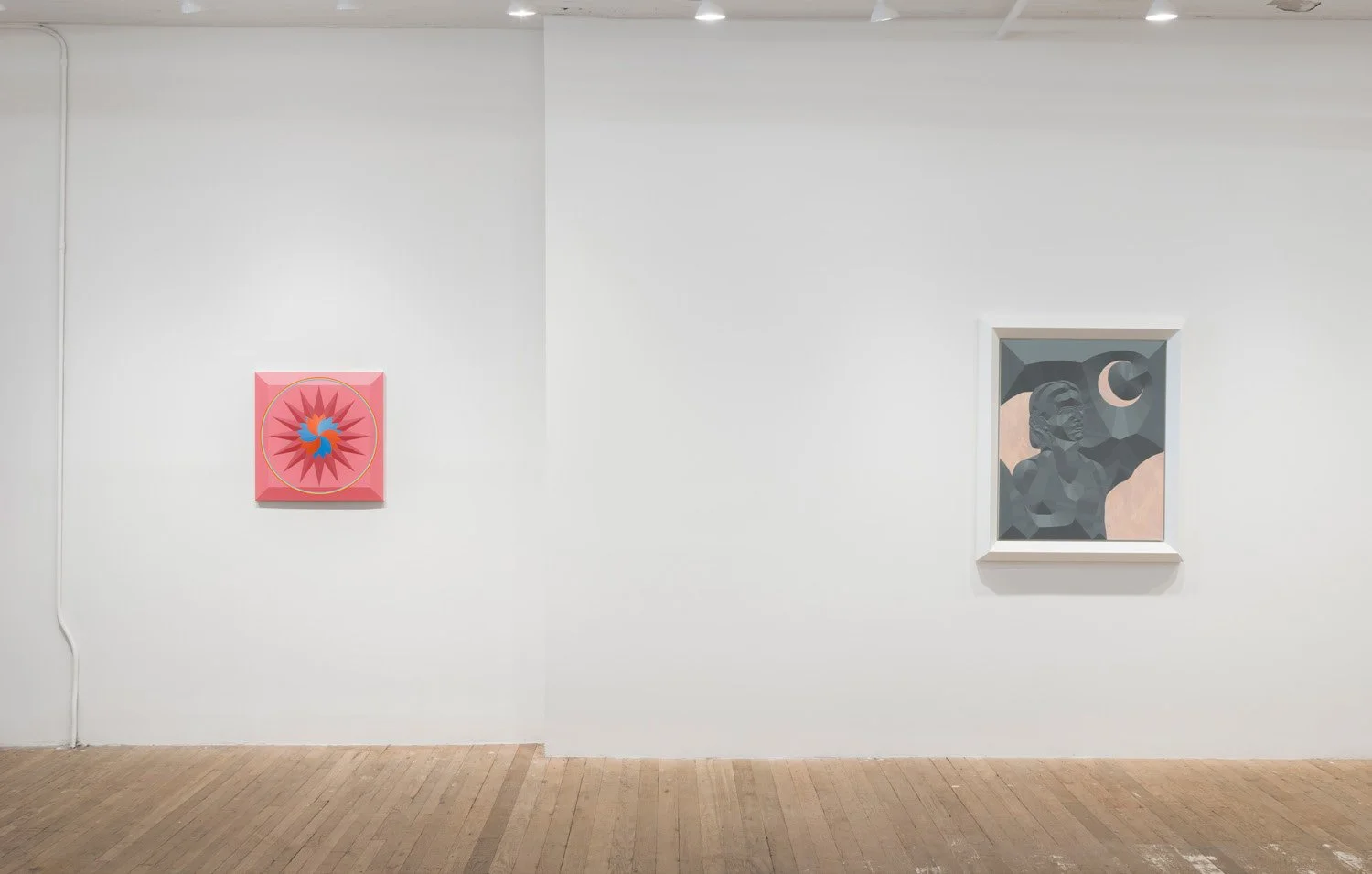
Installation view: Greg Parma Smith, Things in the Air, Hoffman Donahue, New York, NY, 2026.
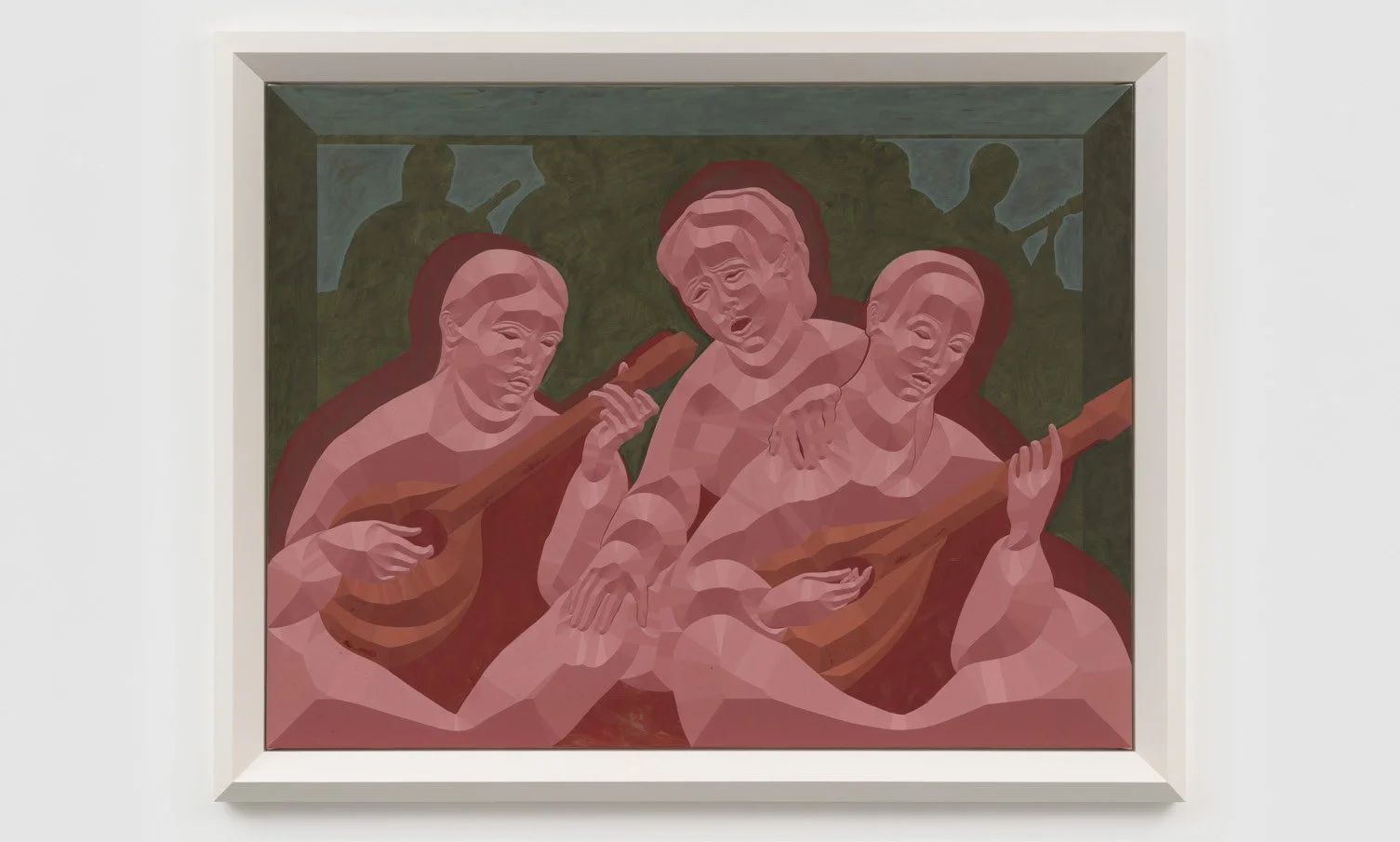
Greg Parma Smith, Survival, 2026. Oil on canvas. 54.5 x 69 inches (138.43 x 175.26 cm) (framed)
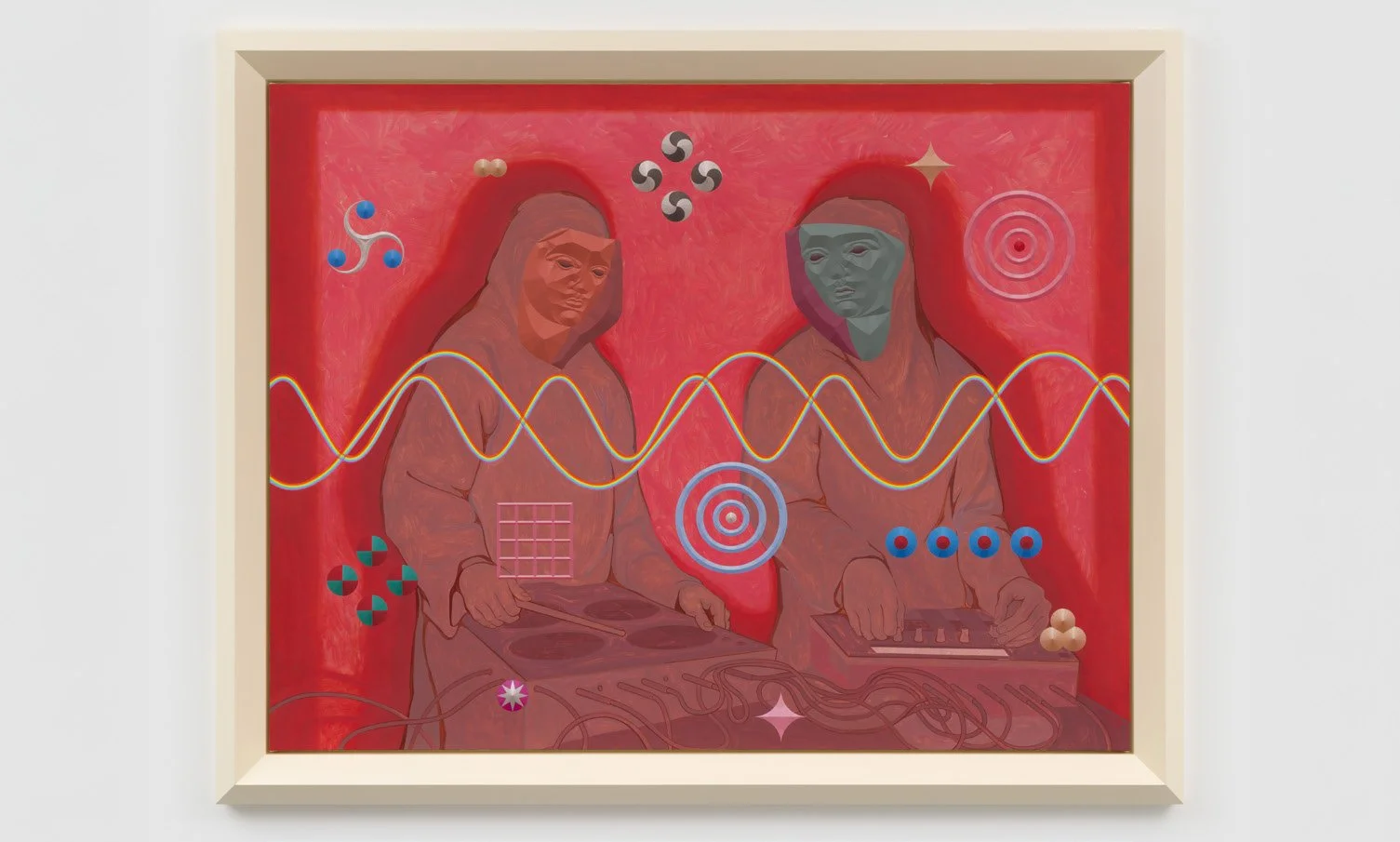
Greg Parma Smith, Signs of Some Thing, 2026. Oil on canvas. 55 x 69 inches (139.70 x 175.26 cm) (framed)
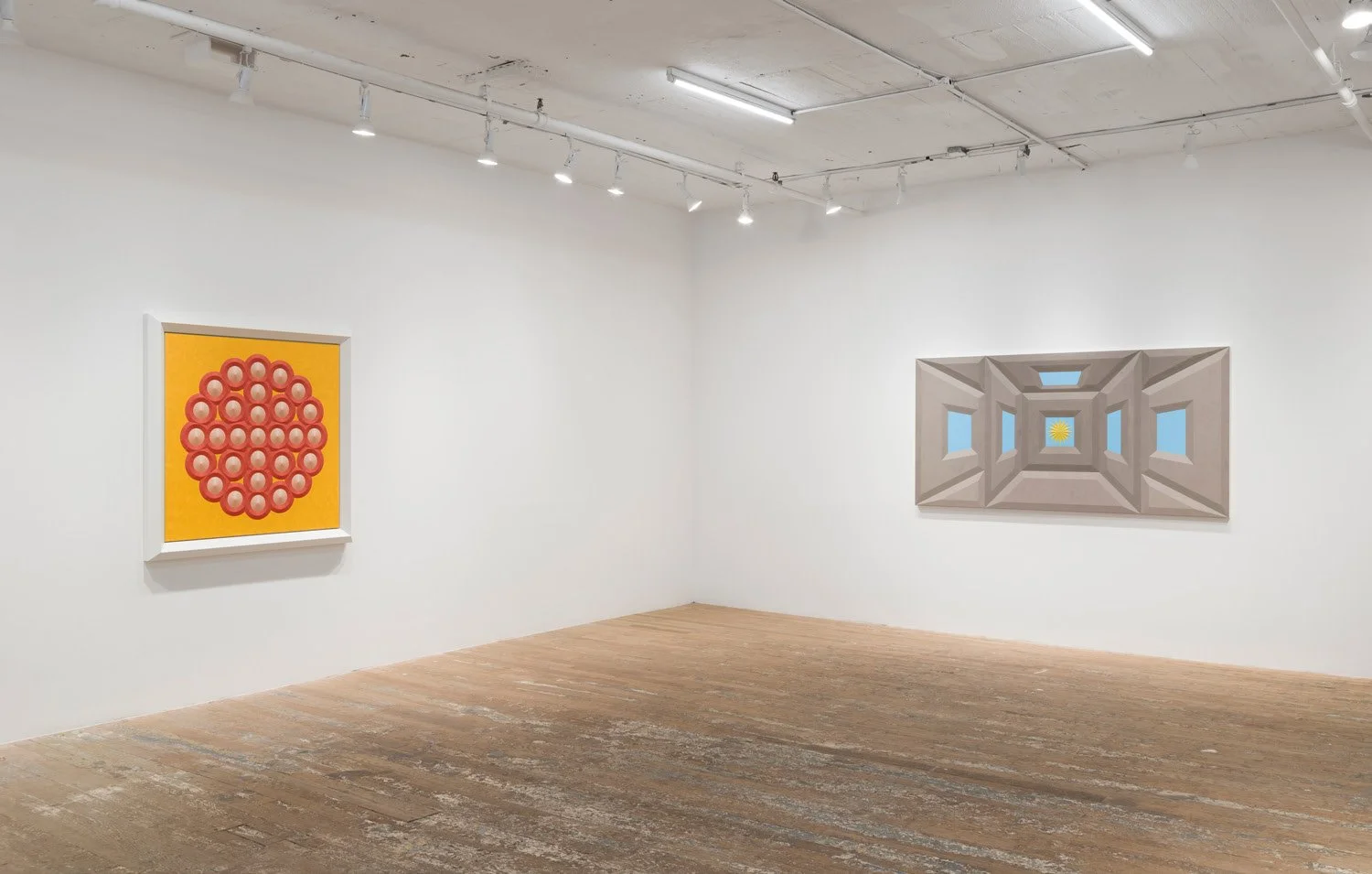
Installation view: Greg Parma Smith, Things in the Air, Hoffman Donahue, New York, NY, 2026.