

“With eyes like ripening fruit”: Manoucher Yektai at Karma
It’s not true that the world is ending — if anything, it already has. And yet life continues, alive in its death. These thoughts — speculations — give a perfunctory account of the work of the late painter and poet Manoucher Yektai, a member of the New York School whose first solo show in the city since 1984 opened at Karma two weeks ago.

Thoughts Had While Watching the Entire Fast & Furious Franchise Against My Will
It was a time of mass shootings, Paris Hilton, boys playing games that looked like war on their consoles and soldiers waging war that looked like video games from drone centers.

“Root-Bound” by JPW3 at Night Gallery
There is a richness in color and fullness of form in these works that drew me into them immediately, and held me there. Within them, colors and shapes seem to crumble and grind together, the complexions plow through each other and themselves.

Kanye West: Donda
In the world of Donda, West wants to treat pop culture as a religion, a place where sinners (abusers, lawbreakers, and killers) have the opportunity for redemption if they want it.

Review of Sanya Kantarovsky at Luhring Augustine
Hugo Skarstedt reviews Sanya Kantarovsky’s “Recent Faces” at Luhring Augustine Tribeca

Review of Structures the Moment (approx.) by pablo lopez
pablo lopez reviews his own new book of poetry, out now from Anonymous Energy.

Anvil and Rose 14
“I have yet to arrive / I will never arrive / in the center of everything is the poem / intact sun / inescapable night.”

Anvil and Rose 13
“I have been wrong before, god of syntax / and understatement, god of slips in silk / and polyester, god of the laboratory, god of newsprint / and sunscreen”

Lauren Quin in Quickening
The layered surface cascades into itself as quickly as it interrupts itself. It vibrates like a field of electricity, full of chaos and psychedelic apparitions, and yet is held together by an arresting unity which appears to emerge at once from above and below — that is, it appears as calculated as it does spontaneous.

Review of Theater Symptoms by Robert Musil
Ioanna Kostopoulou reviews Genese Grill’s translation of Robert Musil’s Theater Symptoms

Anvil and Rose 12
For Anvil and Rose 12, Inspector Watt returns with reviews of books from Paul Celan (tr. Pierre Joris), Jean Daive (on Celan), Alen Hamza, Lara Mimosa Montes, and a COVID anthology edited by Alice Quinn.

Anvil and Rose 11
In this latest Anvil and Rose, Herman Van den Reeck reviews books from Rosebud Ben-Oni, Benjamín Naka-Hasebe Kingsley, Andres Cerpa, Andrew Levy, and Jackie Wang.

Bloom’s Last Word
“We hear the intuitive Bloom, the open and receptive reader, the brooder and fabulous conversation partner, talking and chuckling, searching and scowling; we see him rubbing his brow and thinking aloud…”

Anvil and Rose 10
In this latest Anvil and Rose, Inspector Watt reviews books by Agustín Guambo, David Lehman, J. Michael Martinez, Maureen N. McLane, and Chelsey Minnis.
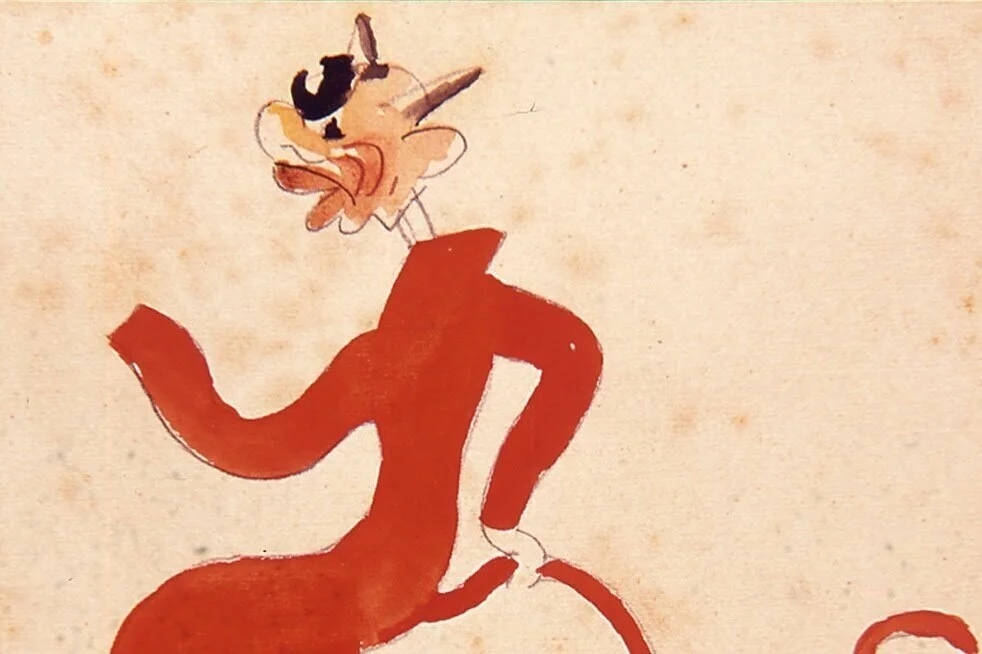
On São Bernardo by Graciliano Ramos
Adam Morris reviews Padma Viswanathan’s new translation of São Bernardo by Graciliano Ramos. “The novel is at once a merciless satire of social class in postcolonial Brazil, and a sensitivity reader’s worst nightmare.“

Resurrection of the Ancillary: Two Books by Ammiel Alcalay
Joe Safdie hits two bird with one stone reviewing Ammiel Alcalay’s A Bibliography for After Jews and Arabs and his forthcoming Ghost Talk.

Anvil and Rose 9
Herman Van den Reeck returns for 5 lightning reviews of books by Justin Phillip Reed, Lana Del Rey, Maria Dahvana Headley, Eliza Griswold, and Norman Finkelstein.

A Land There Is No Title To
‘Song. Sang Freud. Spread on the chalcedony, a land there is no title to.’ And where is that? …

Review of Tom Leaver at McKenzie Fine Art
The artist Tom Leaver is a painter who dons rubber gloves, dips his fingertips into the palette, and spreads gestures across the canvas. To him, it is an act of meditation, the procession of time throughout a day distilled into an image.

Review of Rough Song by Blanca Varela
From within Varela’s rough text, Lara extracts unexpected threads of forms, unarticulated rhythms and figures of speech that keep the metaphors together and yet, by the same token, undermine and fulfill Varela’s austere treatment.