Alannah Farrell at Anat Ebgi
Alannah Farrell: Solastalgia
Anat Ebgi, NYC | September 9 - October 17 2026
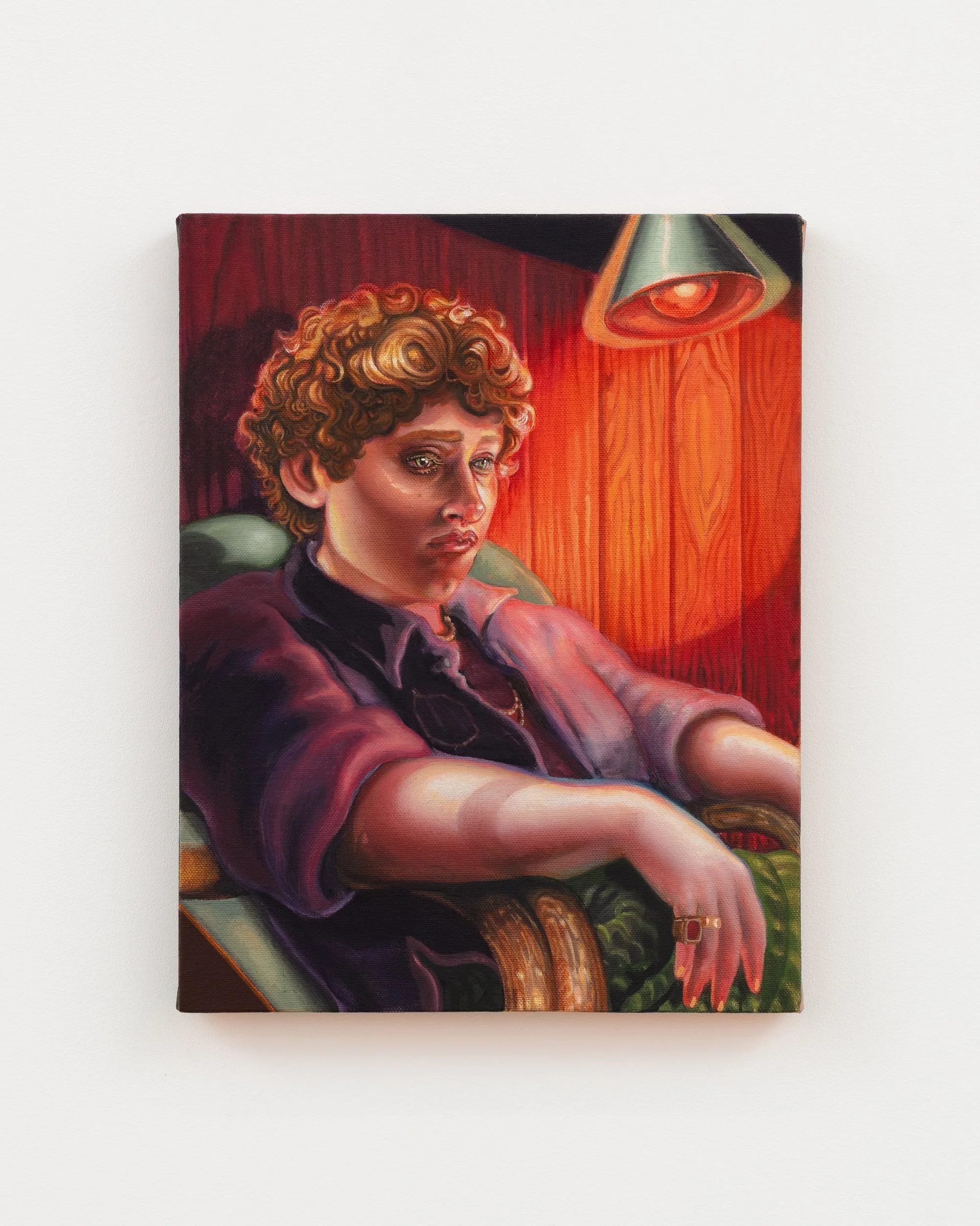
Alannah Farrell, Robin (Fire Island), 2026
Lately my Instagram feed has featured detailed analyses of the economies of Middle Earth (how exactly did Sauron feed his orc army?), a guy sitting in his car who screams inspiration speeches written for Aragorn and clips from the 2001-03 movies. The result is unearned moments of narrative and emotional intensity. With the earth crumbling beneath them, Frodo Baggins, short a ring finger, says to his companion, “I’m glad to be with you, Samwise Gamgee, here at the end of all things.” Next video.
Alannah Farrell’s Robin (Fire Island) looks like a hobbit on a bad trip: Samwise Gamgee forced to live out the end of all things forever in a 1970s wood-paneled rental on Fire Island. Robin is slightly inflated and cartoonishly fuzzy with flicks of LED white on Robin’s eyeballs. The picture recalls those freaky Ivan Albright paintings at the Art Institute in Chicago with their vulgar use of bright colors on black, more like a flash photo than chiaroscuro.
Farrell’s show at Anat Ebgi is a tight, compelling presentation of nine paintings and one unnecessary sculpture (rusty train spikes and an old hammer circled around a brown egg with a too-visible support) The title “Solastalgia” refers to a sense of loss and collapse, a sense of the end of all things, a nostalgia beyond itself.
It becomes nostalgia for nostalgia itself. Farrell’s “solastalgia” is a quite conventional and familiar depiction of exurban decay, with its glowy style of light cast through broken glass across abandoned rooms. Farrell’s subjects are visibly queer—gay sex, tits and a bulge and come with the requisite neon endemic to this decade’s “queer figuration.” They represent a hinterland cosmopolitanism of the types of outsiders that once flocked to cities. One wants to interpret these edges of society as a dialectic of endings and new “queered” possibilities but Farrell’s subjects aren’t staging a revolution, they’re coping. This creates a somewhat unfortunate association of queers with civilizational decay.
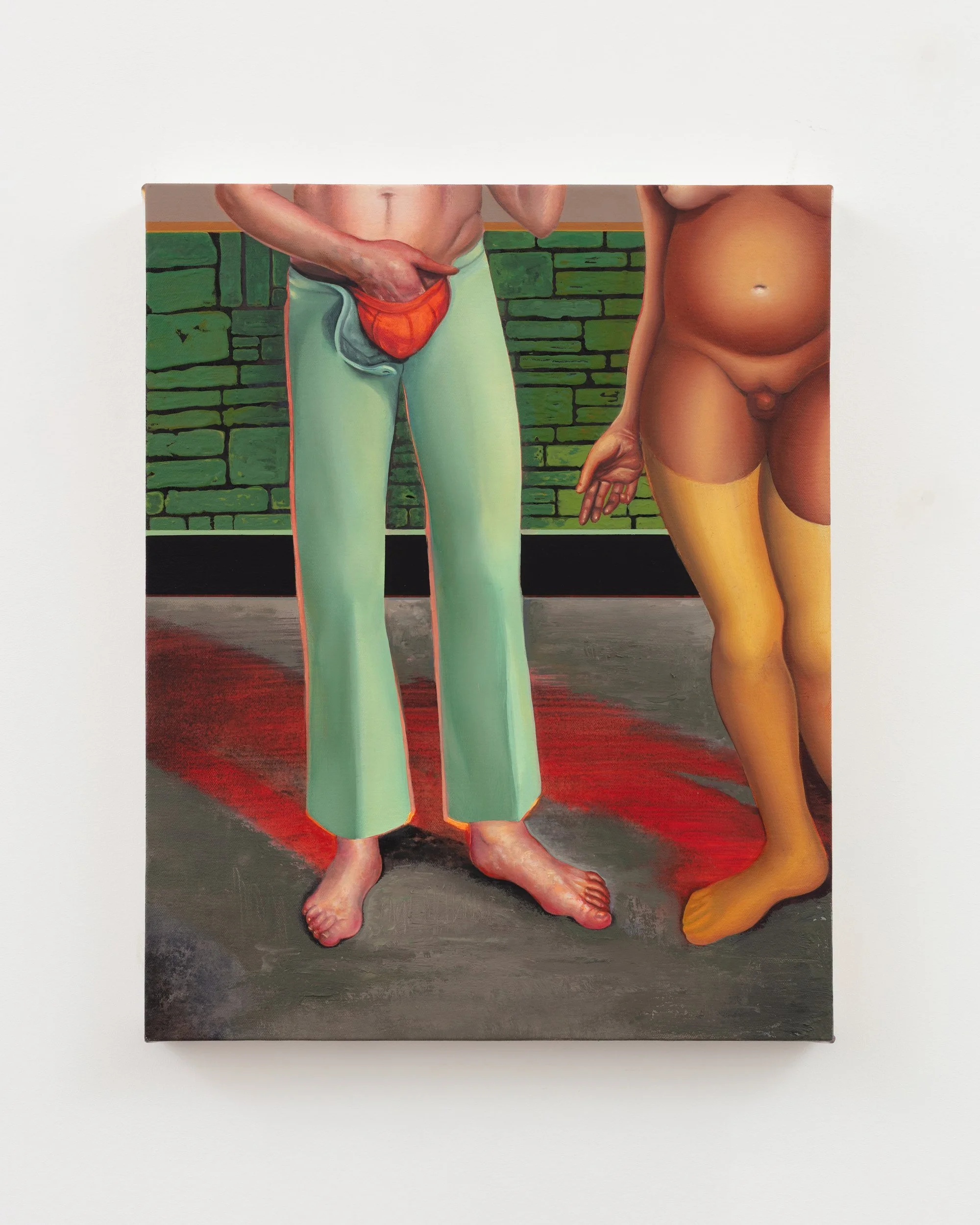
Alannah Farrell, Mommy’s Little Cum Sock, 2026
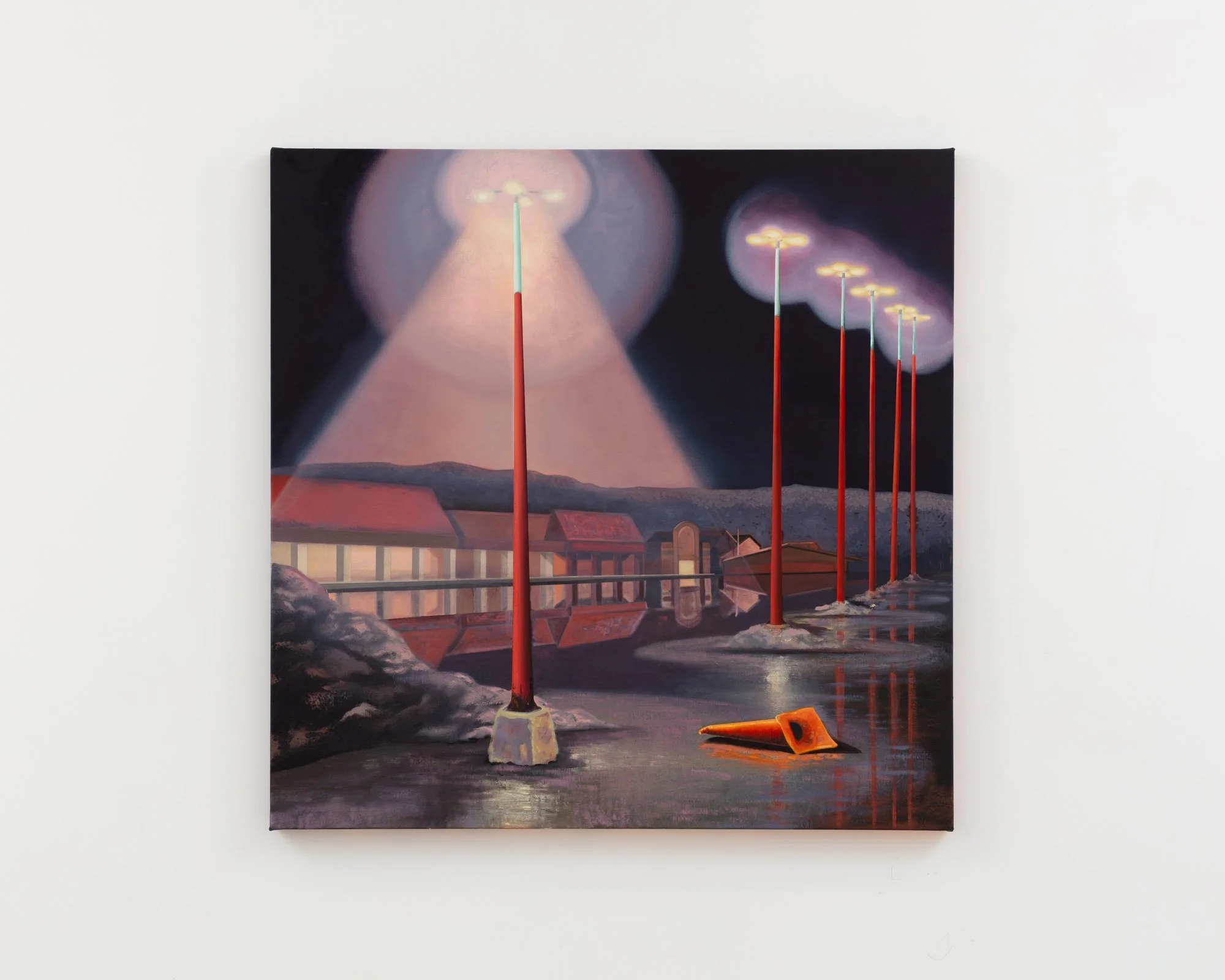
Alannah Farrell, BIG LOT$$, 2026
There’s something inherently romantic about painting ruins. The 18th Century discovered crumbling stone and the 19th discovered history (and the stunning fact that all people are people). The time between the ruin and the picture has now shrunk dramatically (The shuttered subject of Farrell’s BIG LOT$$ must have closed in the artist’s lifetime), but the saccharine wish is the same: the past held some promise and left its architecture as a frame for a modernity that can only forage in the detritus. The promise of Big Lots haunts the present.
Calling Farrell’s pictures surreal feels a bit hollow when so much art (and much more media) is dreamy and weird in a way that imitates the surrealism of the past only pictorially. Still, they are a bit odd and out of date in a way that is worthy of at least a passing comparison to the historical surrealists. Surrender and Longing is an unnerving desexed hookup on a desolated anytown-America main street. What if we fucked on the abandoned railroad tracks? One lover is rendered in peachy human flesh tones while the other, ass to the audience, conspicuously absent an anus, is rendered marmoreal save for the bright orange soles of his feet.
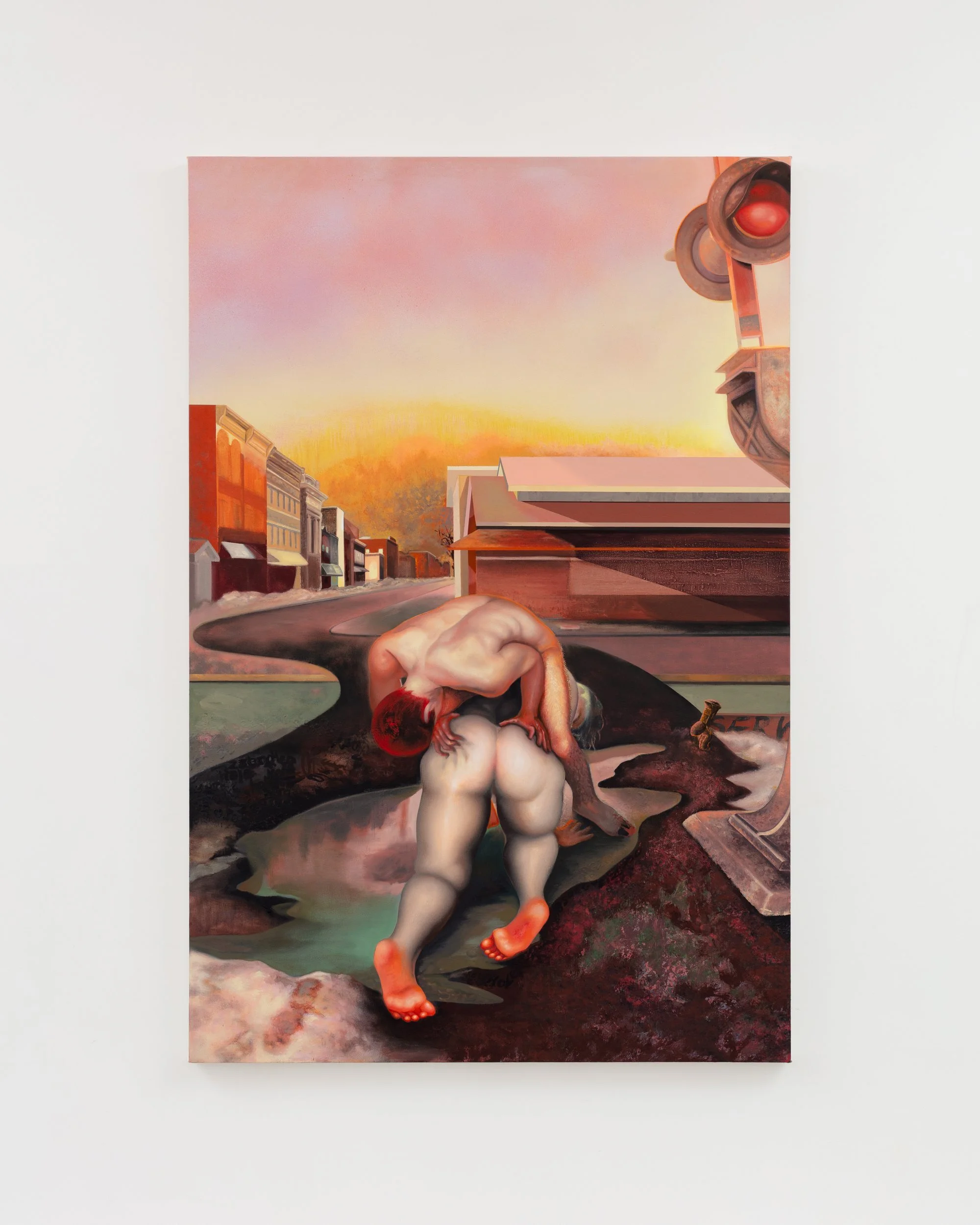
Alannah Farrell, Surrender and Longing, 2026
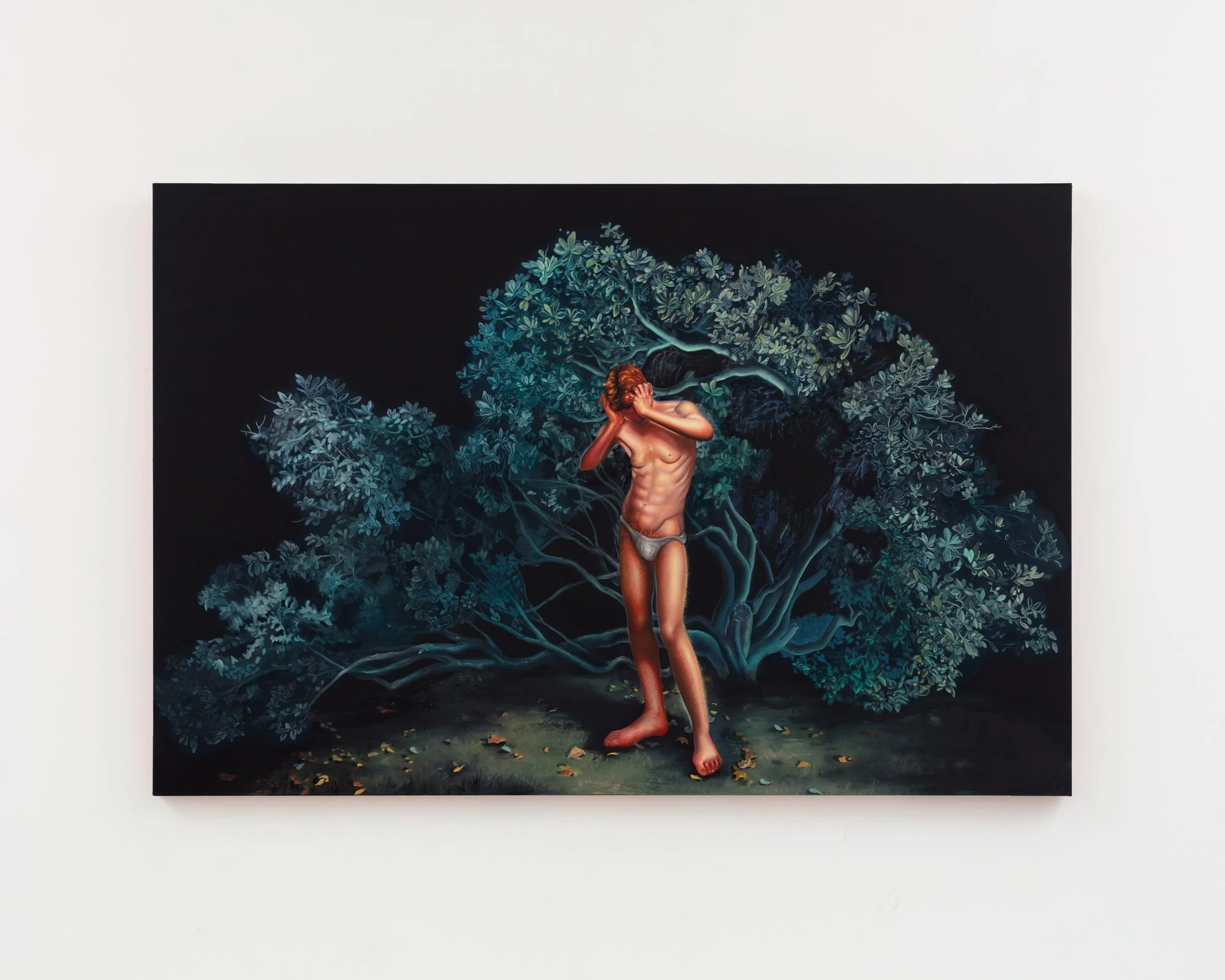
Alannah Farrell, Doubts even here, 2026
The over-stylized torso and contrapposto curve in Doubts Even Here recalls any number of medieval crucifixions. It’s one of the best pictures in the show and succeeds, nearly, as a failure. Farrell does not know what kind of painting they’re up to. The subject is mannerist with a physically impossible torso and too large feet. Most of the canvas is perfectly flat save for one patch evidencing an out of control palette knife.
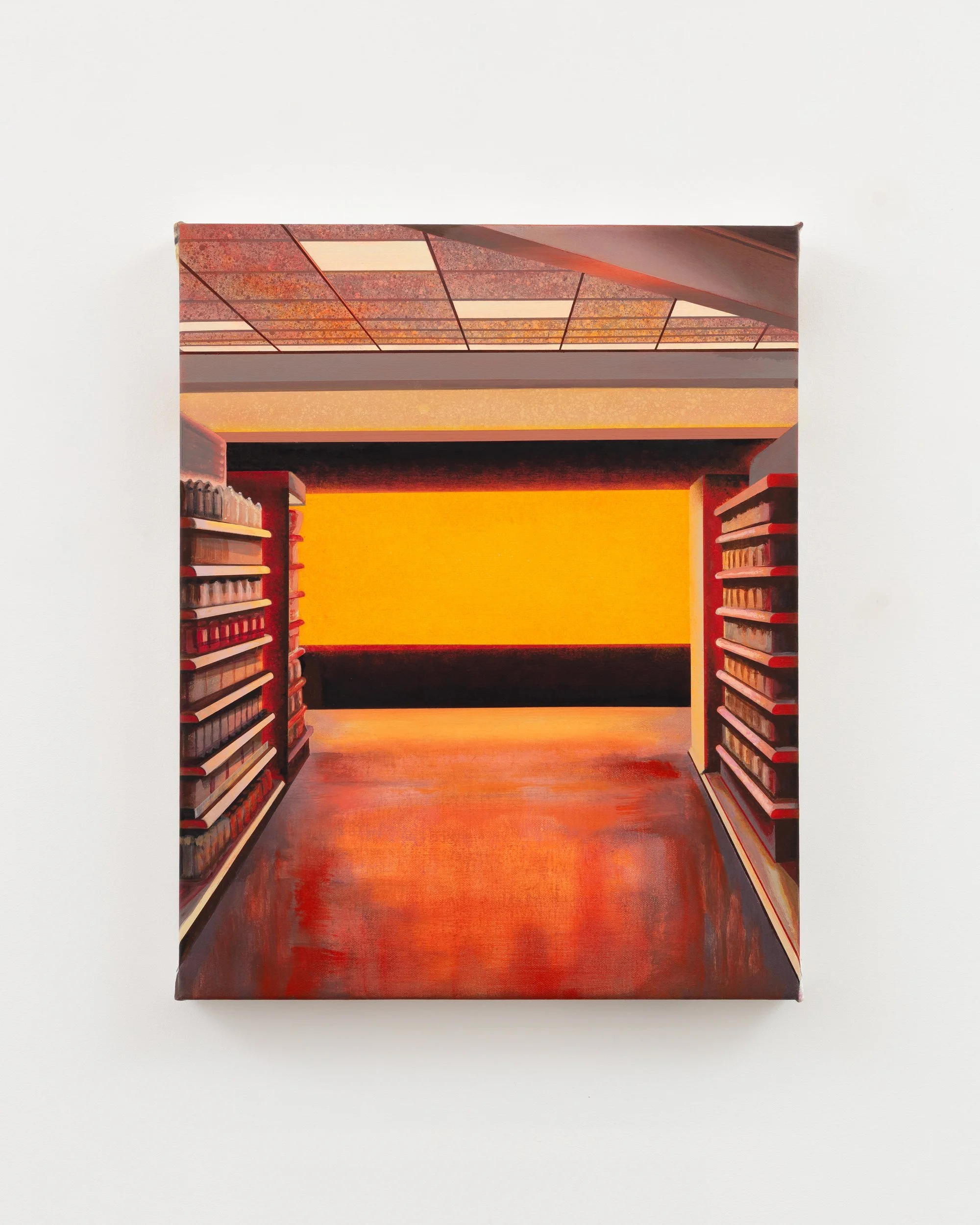
Allannah Farrell, Meat Rack, 2026
This is a problem. Across the work we have hard taped lines, bad impressionism, some random collage, cartoon surrealism, obligate queer neon. Farrell’s uneven execution falls short of the work’s ambition to a deeply humane unease. (The pastiche of techniques succeeds in Meat Rack, a view from inside a supermarket on a glowing orange window that could just as well be a TV screen.)
Next to the gallery-copy press release one finds a printout of James Baldwin’s 1962 article “The Creative Process.” It’s cool that artists are now publicly concerned with the questions “What is art?” and “What is being an artist?”, and can be found dropping seminar readings at their exhibitions in an attempt to solidify whatever the fuck it is they are doing. Better this than the old precession of identities and crises that kept art on life support for the first quarter of the century. But it is similarly symptomatic: a need to prop art up with something that seems important; just now, that something that seems important is art, or the memory of it.
Baldwin’s essay proceeds from a more or less Kantian disposition toward art as a thing that is no other thing, and it moves into the problem of history, of our willingness or unwillingness to come to terms with the past. Writing in 1962 Baldwin could have expected that tiger’s leap to yet take place. In Farrell’s 2026 what’s left is the ruin, with marginal sprites playing in the detritus, here at the end of all things.